UN Climate Change Conference · 9-20 November 2026 · Antalya, Türkiye
Ukraine at COP31
At COP31, Ukraine puts water at the heart of its climate agenda. Ukraine’s water resources are suffering from Russia’s attacks – from polluted rivers and damaged ecosystems to mined waters and long-term harm to the Black Sea. At the same time, Ukraine is developing practical solutions for recovery, resilience and the protection of shared ecosystems.
Date
9-20 November 2026
Location
Antalya, Türkiye
Programme
Events at the Ukraine Pavilion →Live stream
Watch sessions live →Newsroom
Latest News
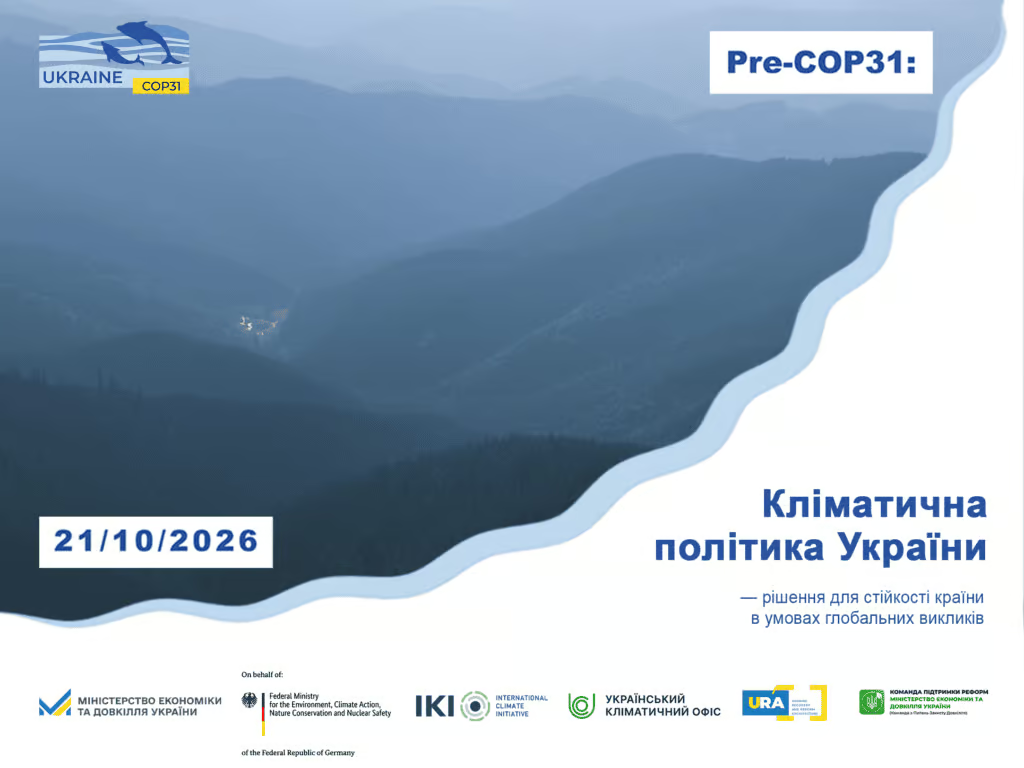
Ukraine’s Climate Priorities to Be Discussed in Kyiv Ahead of COP31
On October 21, ahead of the 31st UN Climate Change Conference (COP31) in Antalya, an international dialogue will take place, focusing on…

Post COP30: government officials and experts discussed the next steps in Ukraine’s climate policy
On December 17, 2025, the event “Post COP30: Results, Achievements, Next Steps in Ukraine’s Climate Policy” was held in Kyiv. It brought…
Post COP30: results, achievements, and next steps for Ukraine’s climate policy
On 17 December 2025, the Ministry of Economy, Environment and Agriculture of Ukraine, together with partners and experts, will report on the…
Our agenda
Ukraine's goals at COP31
- 01
Present Ukraine not only through the environmental consequences of Russia’s war, but as a country that is already developing and implementing practical solutions for recovery, resilience and climate action
- 02
Strengthen international partnerships around Ukraine’s green recovery, energy resilience, ecosystem restoration and innovation
- 03
Highlight the Black Sea as a shared ecosystem connecting Ukraine and Türkiye, and promote its protection and recovery as a matter of regional and climate security
- 04
Engage governments, businesses, international organisations and other partners in Ukraine’s recovery by encouraging investment, expertise-sharing and practical cooperation
At the pavilion, we talk about
Water & the Black Sea
Ukraine and Türkiye are connected by a shared sea and shared ecosystems. The pavilion explores Ukrainian seas, rivers, wetlands and marine biodiversity, as well as why their protection and recovery matter for regional and climate security.
Environmental damage caused by Russia’s war
The pavilion shows how war affects water ecosystems, biodiversity, forests and landscapes, making environmental destruction visible, measurable and understandable.
Green recovery and Ukrainian solutions
Ukraine is already responding through energy resilience, ecosystem restoration, circular economy, innovation, startups and technologies developed by Ukrainian companies and partners.
Energy resilience and climate action
Even during the full-scale invasion, Ukraine continues to develop cleaner and more resilient energy systems and pursue its climate transformation.
Partnership and shared responsibility
The pavilion invites governments, businesses, organisations and visitors to become part of Ukraine’s recovery through investment, expertise, cooperation and practical action.
COP31 Pavilion
The pavilion is conceived as a journey from living water to recovery and action
Water is the central visual and narrative element of the pavilion. The visitor journey begins with clean, living water and the ecosystems of the Black Sea, moves through the environmental cost of Russia’s war, continues to practical Ukrainian solutions and green recovery, and ends with restored water as a symbol of partnership, shared responsibility and future recovery.
The pavilion moves from life to loss, from loss to solutions, and from solutions to action, showing that Ukraine is not only documenting environmental destruction, but already developing responses that can contribute to a safer and more resilient future.
Ukrainian Green Solutions
Solutions from Ukraine for a resilient, low-carbon future
Ukrainian companies and organisations are developing solutions in energy, reconstruction, agriculture and environmental recovery. Discover practical projects that are helping Ukraine build a greener and more resilient future.
Energy and Climate
Green Energy Security & Climate Policy
GIZ
- Challenge
- Energy insecurity and climate change threaten people’s lives and Ukraine’s sustainable development.
- Impact
- Strengthening Ukraine’s green energy security, advancing climate policy and supporting better living conditions and Ukraine’s path towards the EU.
Reconstruction
Restoring Chornobyl’s New Safe Confinement
- Challenge
- A Russian drone strike in February 2025 damaged the New Safe Confinement protecting Chornobyl’s destroyed Reactor No. 4, delaying the safe dismantling of the original 1986 shelter.
- Impact
- Restoring the confinement is essential to maintain long-term nuclear and environmental safety and enable further dismantling works. At least €500 million is estimated to be needed for the restoration.
Energy
Wind Energy for a More Resilient Power System
DTEK
- Challenge
- russia has repeatedly attacked Ukraine's power plants since the full-scale invasion began. Large thermal plants are the most vulnerable. A single strike on one power unit can take around 250 MW of generation off the grid.
- Impact
- Wind farms spread their capacity across dozens of turbines, often over many kilometres. To take out the same 250 MW at a wind farm, russia would need to hit 40 or more turbines. DTEK's Tyligulska Wind Power Plant in the Mykolaiv region has 83 turbines with a total capacity of 500 MW, generating about 1.7 TWh of electricity a year, enough for about 900,000 Ukrainian homes.